Blog
31/08/2026
I don’t think any of us woke up one morning and decided to become emotionally unavailable. It wasn’t a strategic reinvention or cold-hearted vow. It was gradual, adapted through every hellish experience, disappointment, emotional overload, and the final realisation that constantly offering your heart to the wrong people is its own form of punishing burnout.
I sometimes wonder whether loving the wrong person for long enough can make you start speaking their emotional language, because somewhere between wanting someone desperately and eventually learning that wanting them does not necessarily make them stay, I’ve absorbed a few of the very behaviours that once drove me completely insane.
For years, I thought I was Carrie Bradshaw. I was romantic, and it feels almost foreign to me now. I believed in chemistry and coincidence, and I had a rather wonderful naivety about love that made everything feel possible. I didn't think loving someone was embarrassing, and I certainly didn't think there was anything dangerous about letting somebody know that you cared about them.
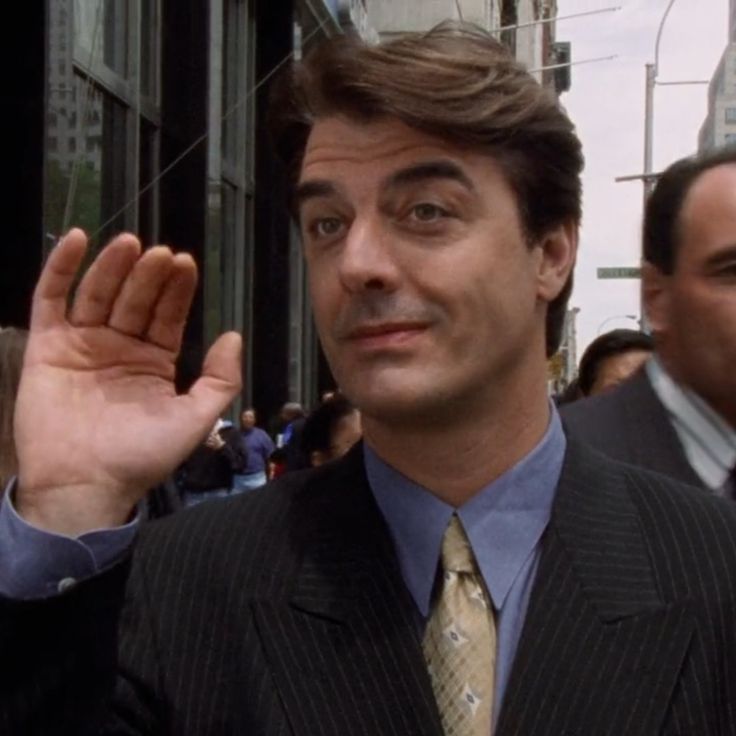
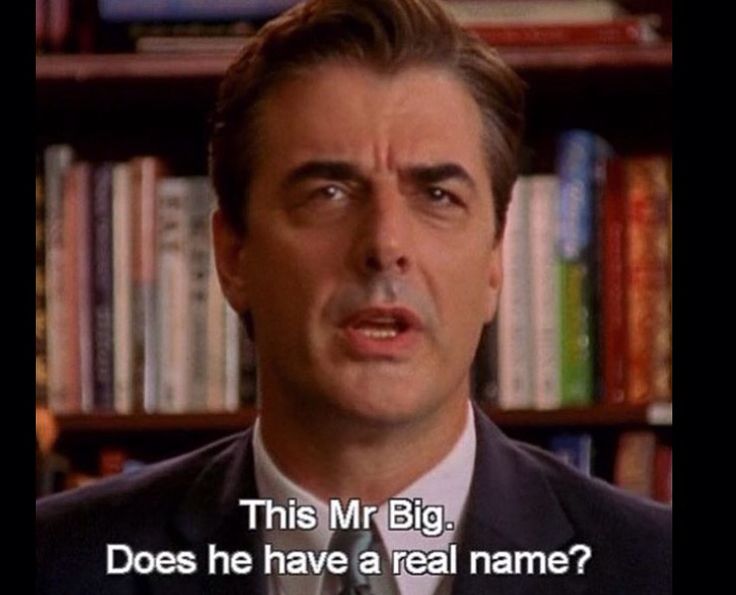
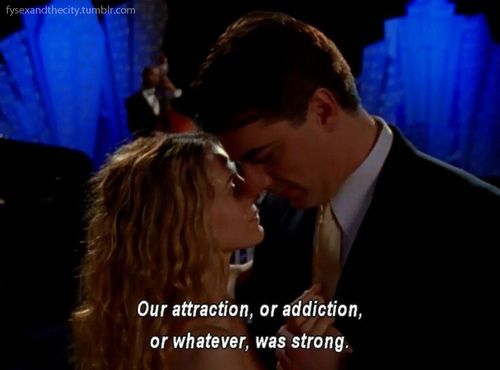
Then I loved my Mr Big.
And somewhere down the line, I became him.
I started adopting the very things that once frustrated me about him. The distance, painful nonchalance, the instinct to protect myself before anybody has even done anything wrong, and the strange ability to feel something very deeply while presenting it as though it barely registered.
I became much better at pretending I don't care.
the safety of seeming cold
I've been told by men that I'm cold more times than I would like to admit, usually after they've spent enough time with me to realise that the woman they've been sitting opposite isn't particularly forthcoming with the sort of immediate warmth they might have expected.
I'm reserved, apparently. Difficult to read. A little intimidating? (I mean, I’m literally 5 '2 babe). Sometimes I'm told I don't seem interested, which is particularly funny because internally I’m likely conducting an entire forensic investigation into whether I like you, whether you like me, and if that thing you said three minutes ago meant something.
Meanwhile, externally, I'm sitting across from you with my arms wrapped around myself like I'm waiting for a bus in February.
It isn't exactly the body language of I am wildly attracted to you and would quite like to know everything about you.
I've noticed myself doing it on dates, or with men I've known for years. I'll sit with my arms tucked around my shoulders, almost physically containing myself, as though some part of me is trying to make sure I don't accidentally spill out onto the table. I'll listen more than I speak, observe everything, and carefully decide how much of myself I'm willing to reveal before I've worked out whether you're someone I can trust with it.
And the irony is that this isn't because I don't have anything to say, or because I don't feel things intensely. It’s almost the opposite.
I feel too much, and I've become very good at keeping it contained.
There is a girl somewhere underneath all of that who would have been much more obvious. She would have laughed too loudly, asked too many questions, gone home and replayed the conversation, probably told her friends absolutely everything and then spent the next week wondering whether she had been overbearing.
I know her because I used to be her.
I wanted to know people properly, the stories behind their stories, their strange childhood habits, everything that made them feel insecure and the things they would never admit mattered to them.
Men meeting me now don't get that immediately. They get the edited version, one who has learned that revealing too much too soon can not only leave you feeling emotionally slutty, but entirely exposed, and that appearing detached gives you somewhere to retreat to if the other person decides they don't want to come any closer.
It’s a remarkably effective form of self-preservation. It’s also not particularly conducive to falling in love.
After enough disappointment, you start to understand why some people become emotionally unavailable. It isn't always because they don't want love. Sometimes they want it desperately, but they have learned that wanting something gives it the power to hurt them.
So they become careful, and then “careful” gradually becomes detached.
Detached soon becomes nonchalant.
And eventually you’re sitting opposite somebody you genuinely like, trying desperately not to let them see that you're actually quite excited to be there.
I didn't stop wanting love
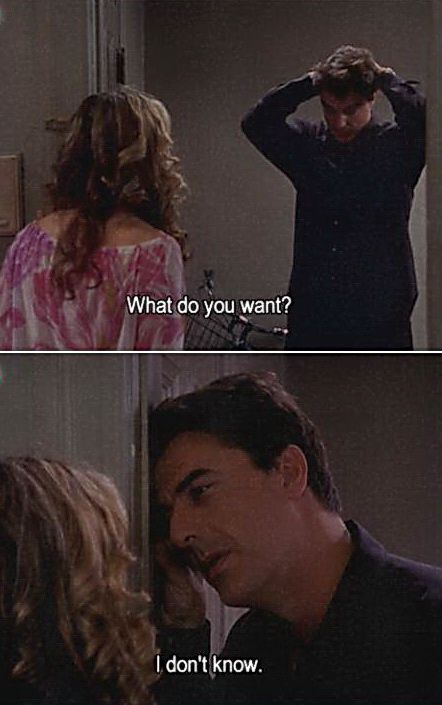
This is the part I think people misunderstand about emotional unavailability. I don't think I ever stopped wanting love. I just didn’t want to be the person who wanted it more.
I don't want to chase someone, convince them to choose me or spend years trying to decipher whether their behaviour secretly means something different from what it very obviously means. I've reached an age where I would rather someone demonstrate that they want to be in my life than have me construct an elaborate emotional PowerPoint presentation explaining why they should.
I want someone who reaches for me too, who makes me feel like my affection isn't something I'm constantly giving away while hoping to receive a little back.
But I’ve also realised that there is a danger in becoming so committed to reciprocity that you turn love into an accountable exercise.
how I slowly stopped chasing the men I once loved
There’s a version of me who would have waited for certain men forever. Those who made my stomach flip for years and burned my brain into addiction. I used to cling to their words and almosts. I used to care about how they saw me, what they thought of me, whether I phrased a message “correctly,” and if being too honest would scare them away.
It’s strange to witness yourself switching off in real time, not from a place of resentment, but from a deep sense of comfort.
the girl I am trying to find again
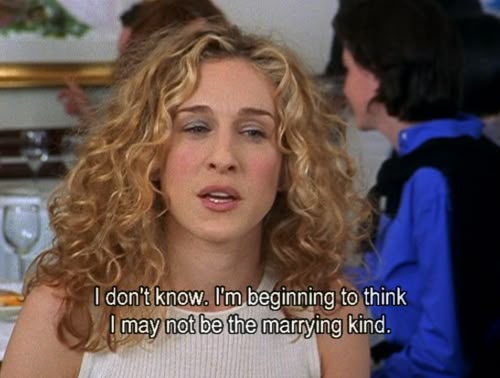
I don't want to become completely soft and throw every boundary I've developed out of the window, because some of the lessons I've learned were necessary. I like having standards. I like knowing what I will and won't accept, and I have no intention of returning to the girl before, believing love was enough to justify somebody treating her badly.
But I don't want self-protection to become my entire personality either.
I want to find the girl who believed love could be fun again.
The girl who wasn't embarrassed by being affectionate, who could wear her heart a little closer to the surface and didn't immediately wonder whether somebody was going to use that against her. The girl who could be feminine and sentimental without feeling like she'd handed someone an instruction manual for how to hurt her.
we didn’t choose emotional distance, dating culture pushed us there
You’d have to be borderline delusional to navigate modern dating with your heart flung wide open. And I say that lovingly, as someone who tried.
Dating apps, as much as we pretend they’re “just a bit of fun,” have fundamentally rewired the emotional chemistry of meeting people. A conversation can start with a simple “Hey, how’s your week going?” and, before you can even finish typing a reply, it swerves into something sexual, bizarre or emotionally vacant. Men will tell you within three messages that they’re lonely, but the moment you ask them something real, they vanish like they were never there.
It’s not men’s fault either, dating culture itself has become overstimulating, transactional, convenient, and strangely hollow. We harden around the edges because constant disappointment becomes tiring, and we detach because experience has taught us that not everyone who seeks closeness actually wants connection.
And, yes, we retreat because we’re exhausted by conversations where we’re expected to be effortlessly interesting, endlessly available, and somehow immune to the casual cruelty of being ghosted by someone whose last message to us was unprovoked enthusiasm.
You cannot exist in that environment without some level of self-protection, and you cannot offer softness to people who treat dating like a little free pick me up.
emotional unavailability doesn’t mean emotional emptiness
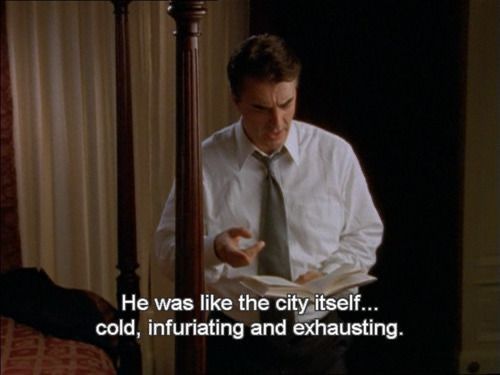
Emotionally unavailable women are often the most romantic, tender, hopeful women you’ll ever meet. We haven’t stopped believing in love. We haven’t stopped wanting partnership.
We haven’t stopped being vulnerable. We’re trying to stop offering it all as a down-payment for basic respect.
where this era is leading us
After years of pouring ourselves into situations that left us depleted, we’ve become more intentional. We’re beginning to prioritise peace, learning that attention isn’t the same as affection, and affection isn’t the same as commitment. And because of that, the criteria for who we let close to us has changed. We’re not entertained by fleeting charm; we watch for integrity and consistency. We’ve grown out of chasing chaotic men and into enjoying our lives in the shadows.
what it's really teaching us
If emotional unavailability in women has a lesson at its core, it’s this: you are allowed to choose yourself, repeatedly, until someone arrives who chooses you with the same intentionality. You are allowed to set boundaries without calling them walls, or offer less to people who give less. And you are allowed to want intimacy without offering unlimited access to people who haven’t earned it. This era pushes us to recognise the difference between excitement and compatibility and between intensity and safety.
It’s teaching us that we don’t need to make ourselves open to prove we’re ready for love. Being selective is not the same as being closed. In fact, the more we honour the parts of us that used to plead for attention or ignore our intuition, the more we realise that emotional unavailability is a healing stage rather than a personality switch. A moment in our lives where we turn inward long enough to rebuild what broke along the way.
When the right person arrives, we won't feel unavailable at all, we’ll feel safe. And safety has a way of unfolding every closed part of us.