Blog
04/02/2026
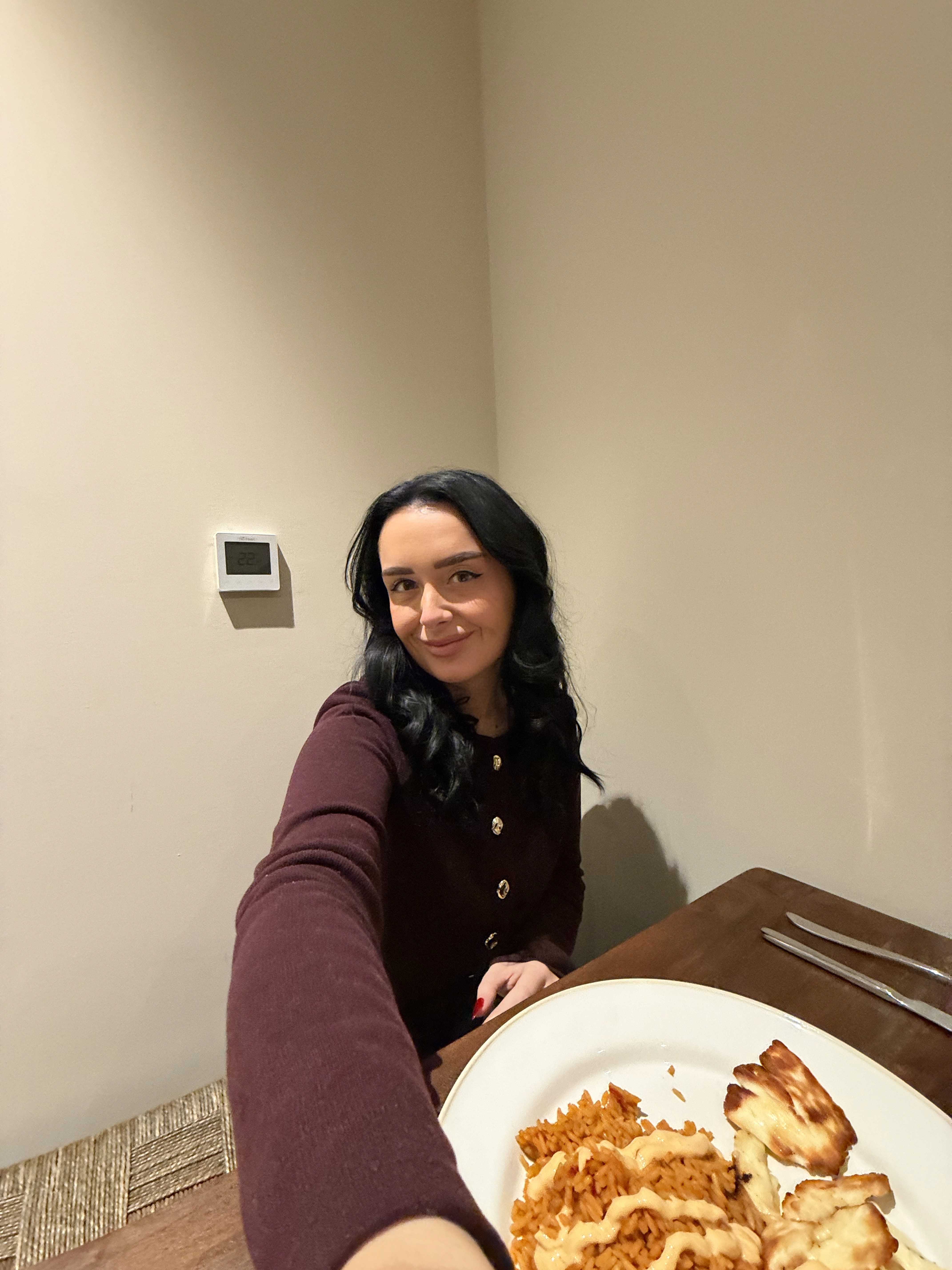
Disclaimer: This piece reflects my personal experience with body image, disordered eating thoughts, and recovery. It is not intended to instruct, encourage, or normalise harmful behaviours. If anything in this essay feels familiar or difficult, you’re not alone, and support is available. Healing looks different for everyone, and reaching out for help is never a failure.
https://www.mind.org.uk/
For a long time, I believed that being smaller would make life easier. That confidence would arrive once my body took up less space, and that, somehow, peace would follow once I reached some invisible benchmark I never consciously chose.
I don’t remember deciding that thinness was my only goal, but I do remember wanting it with intention.
It was an idea planted for me, through years of cultural conditioning that framed being thin as success and optimum self-control. Society decided that smaller was better long before I ever had a say in it.
I’m the “skinniest” I’ve ever been now, and yeah, my stomach is flatter, but it’s not the only thing that feels empty. There’s a hollowness that sits elsewhere too, in my chest, nervous system, in the places where confidence was supposed to show up once my body finally complied with the shiny version of myself I thought would change everything.
Now that I’m here, I’m realising how fragile that belief once was.
the weight obsession we never really unlearned
We like to tell ourselves that the early-2000s fixation on thinness is behind us, archived somewhere between low-rise jeans and tabloid covers. But it never really left. It just changed its vocabulary. Thinness became “wellness.” The restriction became “clean eating.” Obsession became “discipline.”
The pressure slowed down, but somehow kept its grip.
Growing up, we watched women praised for losing weight and scrutinised for gaining it. We learned early that bodies were public property, open for commentary and concern. Thinness was almost considered moral, and way ahead of just an admired aesthetic. It meant you were trying hard enough and that you were in control.
What no one prepared us for is that no matter how small you get, the satisfaction never arrives. There’s always another version of yourself being dangled in front of you, just out of reach. Thinness doesn’t bring relief, it (sickeningly) brings hunger. Emotional. A constant sense that you should want less and be less so you can take up less space while you’re at it.
when people change how they love you
Something shifts in how people respond to you when your body changes, and it’s disorienting in ways no one really talks about. The women who loved you loudly when you were bigger sometimes become pretty quiet when you’re smaller (sidenote: I’m thankfully blessed with healthy, supportive friends). Compliments start to feel like unwelcomed vomit, and concern appears where praise once lived.
Suddenly you’re told you’re “too tiny,” “too small,” that it’s “worrying.” Something I once thought I’d die to hear. People check in on your body in ways they never did before. And the uncomfortable truth is that no one worried when you were bigger. No one told you to slow down and stop “self-sabotaging.” And, funnily enough, no one asked if you were okay during the process.
That concern only arrives once you wear a body that fits closer to what society lowkey rewards, but even then, it comes with conditions. Small enough to admire to a point, yet not so small that it forces people to confront why they admire thinness at all. There are limits to what’s acceptable, and if you seem like you’re up for fighting the battle of the skinniest, you become a threat you didn’t intend for.
It makes you realise that health was never really the point. Comfort was.
why smaller still feels like a reward
I won’t pretend there isn’t a strange sense of reward in wearing smaller clothes. There is. But the longer I sit with that feeling, the more unsettling it becomes. Why does it feel like an achievement? What exactly have I earned?
The framework of shrinking was handed to me just as it was to others, absorbed without consent. Society taught me to treat reduction as progress, and now my body is read as an achievement, even though having it doesn’t really feel like anything.
I’m more anxious than I’ve ever been. More aware of my body. More fragile in ways that have nothing to do with size.
when health anxiety reshapes your relationship with food
Since my heart issues, my body has felt louder and all the sensations are amplified. Fullness feels overwhelming in a way it never used to. Eating until I feel physically full sends my mind into panic, because my chest already feels heavy with fear and awareness.
When your heart feels vulnerable, every bodily sensation becomes suspicious. Fullness feels consuming rather than comforting. Food stops being nourishment and starts becoming negotiation. Not even because I want to be smaller anymore, but because I’m afraid of how it feels to be inside my body now.
being no stranger to disordered eating
I’m not new to disordered eating behaviours. Lockdown brought out a version of me that was deeply rooted in control. I threw up after meals regularly, not out of vanity at first, but out of panic and a desperate need to feel in charge of something when everything else felt unmanageable. But once you see the numbers on the scale lower, addiction and fixations aren’t far behind.
I don’t do that anymore. I haven’t since. But the echoes remain.
Now, I can’t even go to the bathroom after a meal without feeling watched. Without worrying that my family will assume I’m sick again, that they’ll think I’m purging when I’m not. Even something as ordinary as peeing after a diet coke carries shame and suspicion, as if I'm leaving behind criminal evidence.
Newsflash. I’m actually being framed.
And while the behaviours have stopped, the thoughts haven’t disappeared entirely. The dysmorphic thinking still shows up. The mirror checks, constant scanning of my body, quiet calculations around food. The mental tallying of what I’ve eaten, when I’ve eaten, and whether it feels acceptable. The self-hatred that whispers when I feel out of control. Healing hasn’t erased those thoughts, but I’m trying.
the fear of being perceived
This is the part I didn’t anticipate. Being smaller didn’t make me feel safer in society. It made me feel watched.
Regardless of how I felt at my heaviest, I used to love feeling seen. I wore bold colours, experimental makeup, outfits inspired by joy and Y2K nostalgia. I took up space without thinking about it. Now, even after dreaming of this new body, I weirdly crave some level of invisibility. Don’t get me wrong, I’ll post the Instagram pics, but going outside in the real world is a different story. I hide in baggy clothes, not because I dislike my body, but because I don’t want it read, analysed or commented on with every glance and breath. The anxiety that comes with wearing an outfit that even hints at my new frame wasn’t the relief I originally thought it would be.
I hate being perceived or knowing people might be forming opinions about my health, size, or choices. Hell, I thought I cared too much before, and that losing the weight would help me lose the insecurities, yet now it feels unbearable and I’m pre-empting the “you’re getting too thin now!” amongst other unwanted thoughts.
what I know now
Being skinny was never going to save me or change the way I see myself. It was never going to ease my anxiety or bring peace to a body that needed safety rather than scrutiny. There is no weight that guarantees wholeness, no size that protects you from fear, no version of your body that can fix what was never physical to begin with.
The lie is that thinness is a solution. The truth is that it’s just a shape.
I’m trying to learn that fullness comes from care, nourishment, and just a lil gentleness toward a body that has been asked to carry too much meaning for far too long. I don’t know exactly what healing looks like yet, but I know that being thin isn’t actually all it’s cracked up to be.
I want to be really clear here, because this isn’t a woe-is-me victim post, and it’s not me saying my weight loss was accidental or bad.
I started out intending to lose weight, and there were moments where that felt amazing and necessary. What I’m talking about is what happens when illness enters the picture, when your body changes faster than your mind can keep up, and when you’re still trying to exist under the completely unrealistic standards we’re all silently measuring ourselves against.
This isn’t just a women’s issue, either. We’re living in a time where both men and women are chasing some imagined version of physical perfection, in themselves and in each other, and it’s exhausting. I’m not unhappy that I’m slimmer now (I’m not that much of a pick me dickhead), but I am honest enough to say that even the most self-assured people can find themselves suffocated by it if no one talks about where the line is.
If anything, I think the real work now is learning to value the moments where our bodies don’t even cross our minds at all, when we’re laughing, living, eating, moving, and just being. That feels far more important than any number, size, or silhouette ever could.